


1 in 5
live births worldwide are affectedby hyperglycaemia during pregnancy
live births worldwide are affectedby hyperglycaemia during pregnancy
Beginning in 2019, we’ve been building a new approach to pregnancy care, bringing together proprietary intelligence, connected health data and a maternal-fetal model designed around the evolving health of both mother and baby.
Founded in 2019Mumbai, India
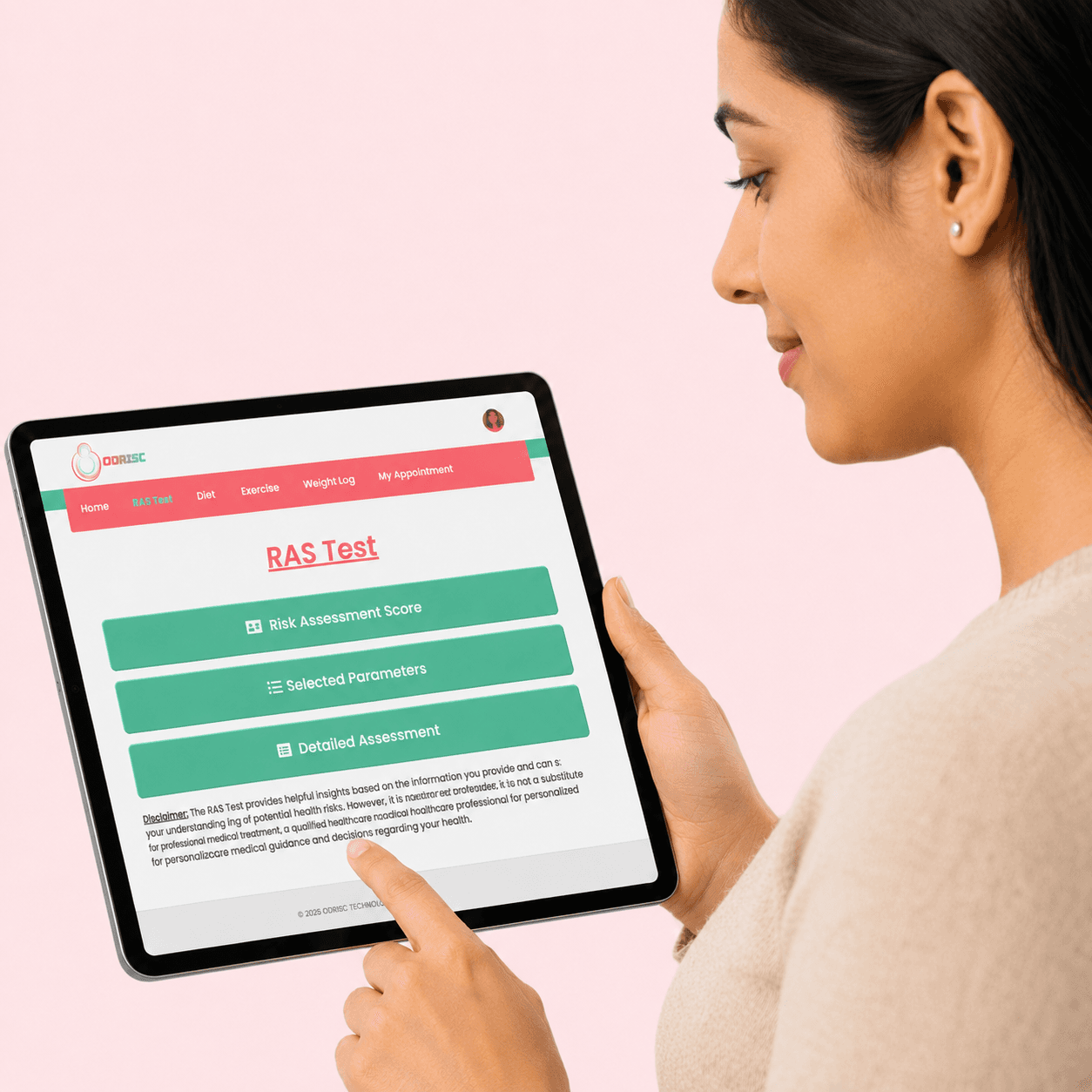
We began developing new technologies for preventive pregnancy care, including the GDM Risk Assessment (RAS Test pictured), designed to identify the risk of gestational diabetes mellitus and provide a clearer, more detailed understanding of the factors contributing to that risk.

Pregnancy care is highly capable, but it often works through separate appointments, measurements and clinical snapshots. Maternal health, metabolic risk, weight, nutrition and activity, and fetal growth may all be monitored, yet the relationships between them can be difficult to see across the full pregnancy journey.
Many pregnancy-related concerns do not begin with obvious symptoms. Gestational diabetes is identified through prenatal screening rather than symptoms, while changes in maternal health or fetal growth may only become meaningful when viewed as a pattern over time.
The system is not failing. It simply needs better ways to connect signals earlier, follow how they change and support timely clinical attention.
live births worldwide are affectedby hyperglycaemia during pregnancy
live births worldwide are affectedby hyperglycaemia during pregnancy
babies worldwide are bornwith low birth weight
babies worldwide areborn with low birth weight
stillbirths occurred globally in 2023, many potentiallypreventable with appropriate care
stillbirths occurred globally in 2023, manypotentially preventable with appropriate care
women died every day in 2023 from preventable causesrelated to pregnancy and childbirth
women died every day in 2023 from preventablecauses related to pregnancy and childbirth
Disconnected information carries a real cost for women, babies, families and healthcare systems. Important changes can be harder to recognise. Opportunities for earlier support may be missed. Care becomes more reactive.
Pregnancy needs a healthcare experience that can understand change before it becomes a complication.
ODRISC is building that connected view.
Pregnancy care has always depended on observation: monitoring the mother’s health, assessing potential risks and following the baby’s development. But for much of its history, these elements have been viewed through separate appointments, measurements and clinical snapshots. The information existed; the continuous maternal–fetal picture did not.
In 2019, ODRISC began by exploring how pregnancy-related risks could be recognised earlier. That work led to the development of the GDM Risk Assessment—a tool designed to identify the risk of gestational diabetes and provide a clearer view of the factors contributing to it.
But it also revealed a much larger challenge. Pregnancy does not progress through isolated risks or measurements. Maternal weight, metabolic health, nutrition, activity and fetal growth all change across time, yet the relationships between them can remain difficult to see.

This led us to a defining question:
“What would pregnancy care look like if the mother’s health and the baby’s growth could be followed as one connected journey?”
The answer became our direction: a maternal–fetal intelligence platform that connects health information across pregnancy, transforms individual measurements into meaningful trajectories and supports earlier, better-informed care.
The vision was clear. Building it responsibly, with clinical relevance and trust at its foundation, became the work ahead.

“When conception hastaken place, one mustbeware of every excessand change”
– Soranus of Ephesus
We bring maternal health,pregnancy risk, personalisedguidance and fetal growthtogether so that women andclinicians can understand thejourney as one—not as aseries of isolated measurements.


Our purpose is to make pregnancycare more connected, preventiveand responsive to change.
By revealing how maternal and fetalhealth evolve across time, ODRISCaims to support earlier understanding,more informed conversations andtimely care decisions. Because everymeaningful change understood soonercan help create a better-supportedpregnancy for both mother and baby.
The next generation of intelligence for pregnancy care.
A personalised assessment that reviews key pregnancy and health factors to help you understand your likelihood of developing gestational diabetes.
Understanding your risk earlier can help you discuss prevention, monitoring and healthy lifestyle choices with your healthcare team during pregnancy.
Your result provides risk context, not a diagnosis, helping inform conversations with qualified professionals about appropriate follow up and pregnancy care.
Personalised nutrition guidance designed around your pregnancy stage, weight goals, dietary needs and preferences to support healthier choices throughout pregnancy.
Nutrition influences healthy weight gain, metabolic health and overall pregnancy wellbeing, making appropriate food choices an important part of ongoing maternal care.
Your nutrition plan supports appropriate weight management and pregnancy needs while complementing individual advice provided by your doctor or qualified nutrition professional.
Pregnancy appropriate activity guidance designed around your stage, needs and physical condition, with exercises developed to support safe, sustainable movement.
Regular appropriate activity can support weight management, physical wellbeing and healthy pregnancy routines when undertaken according to individual needs and professional advice.
Your activity guidance supports healthy movement throughout pregnancy while remaining complementary to medical advice, individual limitations and recommendations from qualified healthcare professionals.
A simple way to record and follow weight changes from preconception through pregnancy, turning individual measurements into a clearer personal weight trajectory.
Following weight over time helps you understand your direction, recognise meaningful changes and stay engaged with recommended pregnancy weight goals.
Your weight trajectory provides useful context for discussions with your healthcare team about pregnancy progress, nutrition, activity and appropriate weight management.
Gestational age establishes the most reliable pregnancy timeline, helping align your baby’s measurements with the correct stage of pregnancy from early care onward.
An accurate pregnancy timeline helps ensure later ultrasound measurements are interpreted against the right stage, reducing confusion when growth is reviewed over time.
It gives your healthcare team a consistent reference point for dating, monitoring growth, and interpreting changes across scans throughout the pregnancy journey.
Biometry uses ultrasound measurements of your baby’s body, such as head, abdomen, and limbs, to assess size and development at each pregnancy stage.
These measurements help show how your baby is growing at a particular moment and provide important context for comparing findings across later scans.
Your clinician can use biometric measurements alongside gestational age and other findings to understand whether growth appears appropriate for your individual pregnancy.
Longitudinal growth analysis connects measurements from multiple scans, showing how your baby’s size and growth pattern change across pregnancy rather than at one visit.
Looking across several scans can reveal growth direction and pace more clearly than a single measurement, helping clinicians understand whether patterns remain consistent.
It helps your healthcare team interpret growth as a developing trajectory, supporting more informed follow-up when changes between scans deserve closer attention.
Doppler ultrasound assesses blood flow in selected maternal and fetal vessels, adding functional information about how the placenta and baby are being supported.
Blood-flow patterns can provide additional context when growth needs closer assessment, helping clinicians understand circulation alongside ultrasound measurements and growth trends.
When clinically appropriate, Doppler findings and staging can help your healthcare team organise risk, plan monitoring, and decide whether follow-up should be intensified.
The 3 Concise Principles
Bring maternal health, pregnancy risk and fetal growth into one continuous view.
Understand how measurements and health indicators change across time.
Turn those changing patterns into meaningful guidance and better-informed care conversations.

“Knowing how your healthand your baby’s growth arechanging today can supportbetter-informed decisionsthroughout pregnancy.Making that knowledgeaccessible is what givesour purpose its meaning.”
ODRISC is not being developed in isolation. Its direction is being shaped through engagement with obstetricians, clinicians and healthcare stakeholders who understand the realities of pregnancy care. Their perspectives help us examine clinical relevance, usability and how maternal–fetal intelligence could support existing care pathways.

We envision a future where pregnancy information does more thandocument individual appointments. It helps create a continuous understandingof maternal health and fetal growth—from the earliest assessment through every stage of pregnancy.
A future where women can better understand their journey, clinicians can view change with greater contextand care can become more connected, preventive and informed.
We envision a future where pregnancy information does more than document individual appointments. It helps create a continuous understanding of maternal health and fetal growth—from the earliest assessment through every stage of pregnancy.
A future where women can better understand their journey, clinicians can view change with greater context and care can become more connected, preventive and informed.
